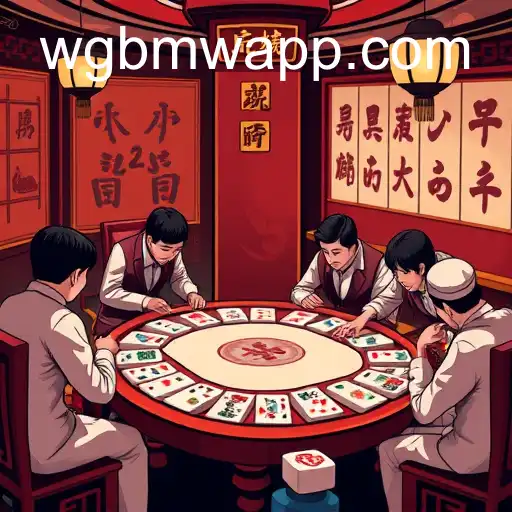
The Rich History of Mahjong: From Ancient Traditions to Digital Platforms
Mahjong, an intriguing game of strategy, skill, and chance, has captivated players for centuries. Its origins are steeped in mystery, with various legends and historical evidence pointing to different beginnings. Believed to have originated in China during the Qing Dynasty, Mahjong has grown in popularity worldwide, embracing cultural nuances and technological advancements along the way.
The Origins and Evolution of Mahjong
The true origins of Mahjong are somewhat obscure, with some historians tracing it back to Confucius in 500 BC. However, the more widely accepted theory is that the game was developed in the 19th century under the Qing Dynasty. Initially, the game was confined to the royal palaces before gradually spreading amongst commoners, becoming a staple of Chinese social culture. It resembles the card game rummy and incorporates elements of dominoes and chess.
From its humble beginnings in China, Mahjong rapidly spread to the rest of Asia and eventually to the Western world. The game made its way to the United States in the 1920s, resulting in a robust American version that adds unique rules and tiles. Mahjong became emblematic of the East meeting the West, representing a cultural exchange that continued to evolve over the decades.
The Timeless Appeal of Mahjong
One might wonder what makes Mahjong so enduringly popular. The answer lies in its dynamic nature, combining strategy, skill, lexical memory, and a touch of luck. These elements make each session unpredictable and engaging. Whether played casually among friends or competitively in tournaments, Mahjong captures the imaginations of its players, offering a blend of mental stimulation and social interaction.
Furthermore, Mahjong is much more than a mere game. For many, it is a cultural ritual and a piece of history. It maintains traditional family values in Asian communities and is regarded as a form of mental exercise in many Western contexts. The meditative nature of Mahjong, combined with its brand of strategic depth, offers both relaxation and mental challenge, appealing to players of all ages.
Modern Mahjong and the Role of Digital Platforms
In the digital age, Mahjong has seamlessly transitioned to online formats, greatly enhancing its reach. Online platforms and mobile applications have made it accessible to millions across the globe, allowing fans to play at their convenience and connect with other enthusiasts from different cultures and backgrounds.
One such platform is WG-BMW.COM, which has contributed to Mahjong's continuing legacy. By offering an immersive online experience, WG-BMW.COM allows players to experience the game traditionally played in bustling parlors or serene homes. The platform brings the game to life with stunning graphics, user-friendly interfaces, and adaptive AI, ensuring that both novices and seasoned veterans can enjoy the game.
[Visit the homepage of WG-BMW.COM for more information on Mahjong](https://www.wg-bmw.com/)
Mahjong: A Cultural and Social Phenomenon
Mahjong's influence is evident not only in how it is played but also in how it has woven itself into the literary and cinematic landscape of multiple cultures. Books, films, and television often incorporate Mahjong as a narrative device, showcasing its role in people's lives and cultural rituals.
Furthermore, Mahjong clubs have emerged worldwide, fostering a sense of community and camaraderie among enthusiasts. These clubs serve as educational spaces where newcomers are welcome to learn the game rules and strategies, keeping the traditional art of Mahjong alive.
The globalization of Mahjong has resulted in several regional variants, each with its unique rules and conventions. While the Chinese and Japanese variations remain the most popular, regional adaptations such as Filipino and American Mahjong continue to introduce new dimensions to the game.
Impact on Mental Health and Cognitive Function
Recent studies suggest that Mahjong has several health benefits, particularly in maintaining cognitive function in older adults. The strategic and memory-based nature of the game stimulates diverse areas of the brain, potentially delaying the onset of conditions such as dementia and Alzheimer's.
Moreover, the social aspect of Mahjong is noted for counteracting loneliness and depression. By bringing people together, whether physically or virtually, Mahjong promotes social bonding and interaction, which are crucial for mental health.
The Future of Mahjong in the Digital Age
As technology continues to evolve, so too will the game of Mahjong. The rise of virtual and augmented reality could potentially redefine how the game is played, offering even more immersive and interactive experiences.
What remains unchanged, however, is Mahjong's core tenet of combining strategy, skill, and chance. Whether through an app, a virtual reality setup, or a traditional tile set, the game retains its fundamental allure, capturing the hearts of young and old alike.
In conclusion, Mahjong endures as a timeless symbol of cultural heritage and cross-cultural fascination. Platforms like WG-BMW.COM exemplify how digital advancements can maintain and enhance traditional games, ensuring they remain accessible and appealing to future generations.